
Ground Coverage You Actually Want Gone
Weed identification and removal in New Orleans for properties overrun by dollarweed, oxalis, or other persistent broadleaf and grassy invaders
Dollarweed spreads aggressively in the poorly drained soils and high water tables common across New Orleans, often forming dense mats in lawns, garden beds, and along foundation edges where water pools after rain. Southern City Farm and Landscaping identifies weed species by leaf shape, root structure, and growth pattern, then applies targeted removal methods based on whether the weed spreads by seed, rhizome, or stolons. You notice these weeds most in late spring and summer when they outpace desirable turf and ornamentals, and the longer they remain, the more difficult they are to remove without disturbing surrounding plants.
Dollarweed thrives in compacted, waterlogged soils and is often a sign of poor drainage or overwatering, so removal involves both pulling or treating the existing plants and addressing the conditions that allowed them to establish in the first place. Oxalis, recognizable by its clover-like leaves and yellow flowers, reproduces through tiny bulbs that break off during hand-pulling, which means mechanical removal often worsens the infestation unless every bulb fragment is extracted. Other common South Louisiana weeds include spurge, which releases a milky sap when broken, and various grassy invaders like crabgrass and signalgrass that establish in thin or stressed turf.
Arrange a property assessment to identify which weed species are present and what conditions are supporting their spread.
How Different Weeds Require Different Removal Approaches
Broadleaf weeds like dollarweed and oxalis are treated with selective herbicides that target them without harming surrounding turf, though repeated applications are usually necessary because these weeds regenerate from root fragments or bulbs left in the soil. Grassy weeds require pre-emergent herbicides applied before germination or post-emergent treatments that work only on actively growing plants, and timing matters because applications made outside the weed's active growth window produce limited results. Hand-pulling is effective for isolated patches, but it must be done when soil is moist enough to extract the entire root system without breakage.
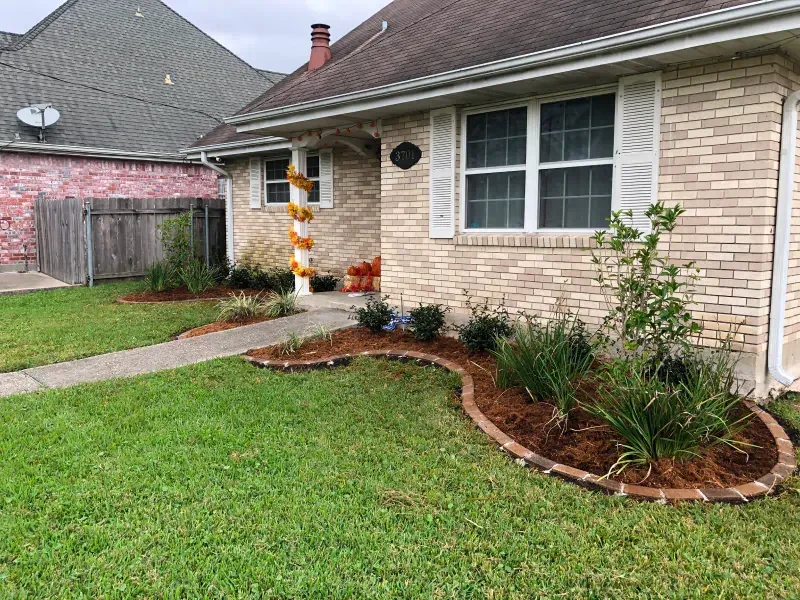
After weeds are removed, you will see open soil or thin turf where the weeds were previously crowding out desirable plants, which creates an opportunity for reseeding or mulching to prevent reinfestation. The difference becomes noticeable within two to three weeks as treated areas stop producing new weed growth and desirable turf or ground covers begin filling in the cleared space.
Weed removal is most successful when combined with soil improvement—aerating compacted areas, adjusting irrigation to reduce standing water, and applying mulch to garden beds to block light from reaching weed seeds. Properties with recurring dollarweed infestations often need drainage correction or soil amendments to reduce water retention, while oxalis problems typically require multiple treatment cycles spaced several weeks apart to deplete the bulb reserves in the soil.
Common Questions About Weed Control in South Louisiana
Weeds are a symptom of underlying conditions, and understanding what drives their growth helps prevent them from returning after removal.
- What makes dollarweed so difficult to control in New Orleans lawns? Dollarweed thrives in consistently wet soil and spreads through both seeds and creeping stems that root at each node, so removing it requires addressing drainage issues and applying herbicide to actively growing plants during warm months when it is most vulnerable.
- Why does hand-pulling oxalis seem to make it worse? Oxalis reproduces through small underground bulbs that detach easily when the plant is pulled, and each fragment left in the soil can generate a new plant, which means mechanical removal without chemical treatment often increases the infestation.
- How long does it take to see results after treating weeds? Broadleaf weeds typically show signs of dieback within one to two weeks of herbicide application, while grassy weeds may take longer, and multiple treatments are usually needed to address plants that were not actively growing during the first application.
- What can be planted in areas where weeds have been removed? Once weeds are cleared, you can overseed with turf grass, install ground covers like Asian jasmine or liriope, or apply mulch to garden beds to prevent weed seeds from germinating in the exposed soil.
- How do you prevent weeds from coming back after removal? Prevention requires improving drainage in low-lying areas, applying pre-emergent herbicides before weed seeds germinate, maintaining healthy turf density to shade out weed seedlings, and mulching beds to block light from reaching the soil surface.
Southern City Farm and Landscaping evaluates weed pressure, soil conditions, and drainage patterns to develop a removal and prevention plan suited to your property. Schedule a weed assessment to identify species and prioritize treatment areas.

